At Community Medical Services, our mission has always been guided by a simple idea: meet people where they are and remove every possible barrier that stands between them and the lifesaving care they need.
For many individuals living with opioid use disorder (OUD), transportation is one of the most significant and persistent barriers to treatment. Reliable access to a vehicle, a predictable work schedule, fuel costs, and long travel distances, especially in rural areas, can determine whether someone receives care or goes without it. Even when a person is ready to seek help, geography can still stand in the way.
In Northern Arizona, we are excited to take another step forward in fulfilling our commitment to accessible, patient-centered care.
Bringing Treatment Directly to Northern Arizona Communities
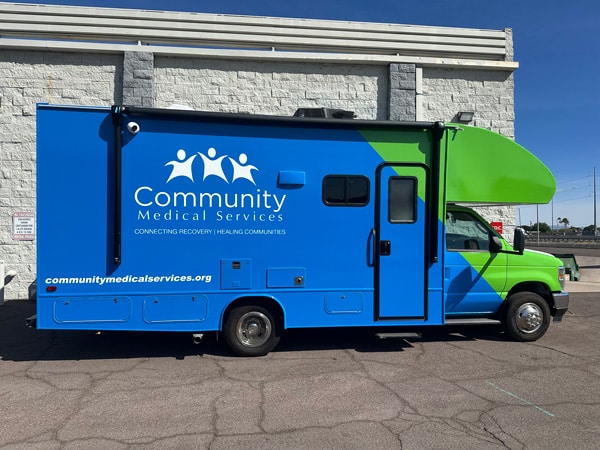
Our new Mobile Med Unit (MMU) is based out of Prescott Valley, AZ. This mobile clinic will bring medications, counseling, assessments, and provider access directly into the heart of communities across Yavapai and Coconino counties – places where treatment options are limited and transportation challenges are often overwhelming.
This is more than a new service. It is a continuation of our promise: nobody should have to overcome geography to overcome addiction.
With this unit, individuals living up to 100 miles from our Prescott Valley clinic will now have the option to receive care in their own communities, on their own terms, without the burden of long-distance travel. For some, this access will be the first real opportunity to begin treatment. For others already connected to CMS, it provides a more convenient, consistent way to remain engaged in their recovery journey.
Why Mobile Addiction Treatment Matters in Rural Arizona
In many parts of Northern Arizona, healthcare access is shaped by distance. A person may live far from the nearest clinic, lack dependable transportation, or face competing demands like work, childcare, housing instability, or court obligations. When treatment requires a long drive every day or every week, even highly motivated individuals can struggle to stay engaged.
That is why mobile treatment can be so important.
A Mobile Med Unit helps bring opioid treatment services closer to the communities that need them most. Instead of asking patients to absorb the time, cost, and stress of travel, the care model moves toward the patient. That shift can make treatment more realistic, more sustainable, and more responsive to the realities of daily life.
For rural communities, this kind of access is not simply a convenience. In many cases, it can be the difference between delayed care and timely support.
How the Mobile Med Unit Is Built Around the Patient
What makes mobile treatment so impactful is its ability to reshape the treatment experience around patient needs. The MMU functions as a complete extension of our brick-and-mortar clinic – offering new intakes, medication dosing, counseling, UA testing, and telemedicine support.
Patients can choose to complete all services on the mobile unit or transition between the MMU and the Prescott Valley addiction clinic depending on their preference and stability. This flexibility honors the realities of their lives. Every person deserves a care model that supports, not complicates, their path to recovery.
We have also ensured the unit is equipped with naloxone and community impact specialists who can help connect individuals to broader resources, including housing support, basic needs assistance, and other services that may strengthen stability. Treatment does not stop at medication. Our care is designed to support the whole person.
What Patients Can Expect from Our Mobile Med Unit
For many people, the idea of receiving treatment through a mobile clinic may be new. The goal of the MMU is to make care more accessible without lowering the quality or continuity of services.
Patients may be able to access services such as:
- Assessments and intake support
- Medication services
- Counseling and recovery support
- Urine analysis testing
- Telemedicine connections to providers
- Naloxone access and education
- Referrals to community resources and supportive services
This model allows patients to receive care in a setting that is structured, professional, and designed to meet them where they are. It also creates more flexibility for people whose lives do not fit neatly into a traditional clinic schedule or location.
Expanding Access to Methadone Treatment Without Added Travel Barriers
As CMS continues to grow services in Northern Arizona, this Mobile Med Unit also helps expand access to methadone treatment for people who may otherwise face major transportation obstacles. For many patients, the challenge is not only finding treatment but being able to return consistently for care and dosing.
By integrating mobile services into our broader opioid treatment program model, we can reduce the burden of extra travel and create a more realistic path to treatment and ongoing recovery support.
This matters because access should not depend on whether someone can drive long distances every day or rearrange their life around transportation. For eligible patients, the ability to connect with care closer to home can make treatment feel possible.
In practical terms, this means some individuals may be able to begin services and receive same-day dosing without unnecessary additional travel barriers. That kind of timely access can be especially important for people who are ready to take the first step now, not weeks from now.
How Mobile Medication Access Supports Engagement in Care
Methadone remains one of the most established medications used in the treatment of opioid use disorder. But even when patients are motivated, the structure of treatment can be difficult to sustain if access points are too far away.
That is where mobile care can make a difference. A Mobile Med Unit can help:
- Reduce long-distance transportation demands
- Support continuity of care for patients in rural communities
- Make it easier to stay engaged in treatment
- Create a more accessible path to medication, counseling, and provider support
- Reduce the friction that often causes people to delay or drop out of care
For many patients, success in treatment has less to do with willingness and more to do with whether care is realistically accessible. Mobile services help make that access more consistent.
Supporting Continuity of Care
Access is only one part of effective treatment. Staying connected to care also matters. For some individuals, the biggest challenge is getting started. For others, the challenge is staying engaged over time. Missed appointments, transportation issues, unstable living conditions, and changing work schedules can all disrupt treatment. Mobile services can help reduce those disruptions by making care more consistent and easier to reach.
That consistency matters. When patients have a practical way to keep showing up for treatment, they are better positioned to stay connected to medication, counseling, provider support, and community resources. A mobile model helps create more opportunities for continuity, which is an important part of patient-centered care.
Reaching People Who Need Us Most
The communities being served by this MMU represent some of the highest-need populations in Northern Arizona, from individuals experiencing homelessness to those living entirely off-grid. Many may have little or no access to transportation, formal healthcare, or local treatment options. Through scheduled weekly stops, the MMU will bring reliable and compassionate care to these often-overlooked regions.
This includes better access for the 14 CMS patients already in the Flagstaff area, as well as individuals served by Flagstaff Shelter Services, an organization supporting more than 100 people who often struggle to access medical care of any kind.
When care is brought into the community, it becomes easier to connect with people who might otherwise fall through the cracks. That is part of what makes mobile treatment so meaningful. It expands the reach of services beyond clinic walls and creates more entry points into care for people who may not have had realistic options before.
A Whole-Person Approach to Recovery
At CMS, we believe treatment works best when it recognizes the full reality of a person’s life. Recovery is not just about one appointment, one medication, or one moment of readiness. It is an ongoing process that may involve healthcare, behavioral health support, housing needs, transportation challenges, employment concerns, and family responsibilities.
That is why the Mobile Med Unit is designed to do more than dispense services. It is part of a broader care approach that prioritizes dignity, flexibility, and long-term support.
By offering access to medication, counseling, provider support, naloxone, and community resource navigation, the MMU helps bring multiple layers of care together in a way that is more reachable for patients across Northern Arizona.
Frequently Asked Questions About Our Mobile Med Unit
What is a mobile med unit?
A Mobile Med Unit, or MMU, is a mobile clinic that brings treatment services directly to communities. It can function as an extension of a brick-and-mortar clinic and offer services such as assessments, medication support, counseling, testing, and provider access.
Who can benefit from mobile addiction treatment in Northern Arizona?
Mobile addiction treatment can be especially helpful for people living in rural communities, individuals experiencing homelessness, patients without reliable transportation, and those who live far from a traditional clinic.
Why is transportation such a major barrier to OUD treatment?
People may need to travel long distances for care, and not everyone has reliable transportation, flexible work hours, gas money, or the ability to leave home regularly. In rural areas, those challenges can make ongoing treatment much harder to access.
When people see treatment showing up consistently in their own community, it can help normalize care and reduce some of the intimidation that keeps them from reaching out. It also signals something important: recovery services belong in every community, not just in major population centers.
How does a mobile addiction clinic help people with opioid use disorder?
A mobile clinic helps reduce barriers to care by bringing treatment closer to where patients live. This can make it easier for people to begin care, stay engaged in treatment, and avoid disruptions caused by travel, transportation costs, or distance.
Find Compassionate Treatment for Opioid Use at Community Medical Services
Mobile care is not a trend for us; it is a natural extension of who we are. As the needs of our communities evolve, we will continue to evolve with them. Our team is committed to constant innovation in service of one core belief: Patient care comes first. Always.
The launch of this new Mobile Med Unit is one more step toward a future where treatment is not defined by a location, but by accessibility, humanity, and the belief that recovery should be within reach for everyone.
If you or someone you know is looking for opioid treatment services in Northern Arizona, Community Medical Services is here to help. Our Prescott Valley Mobile Med Unit is designed to bring compassionate, patient-centered care closer to the communities that need it most. Contact Community Medical Services to learn more about treatment options, mobile service availability, and how to take the next step toward care.